
Unforgettable Week in Jordan: Heat, Tea and the Word I Heard Everywhere
“Welcome to Jordan!”
I heard it everywhere. At the airport, at petrol stations, in small shops, from strangers passing by on the street.
At first, my friend and I were confused by how often we heard it. But there was something disarming about the way Jordanians said “welcome.” It never sounded scripted or performative. It just felt sincere, as though every person felt personally responsible for your experience in their country.
Heat, Landscape, Driving and First Impressions
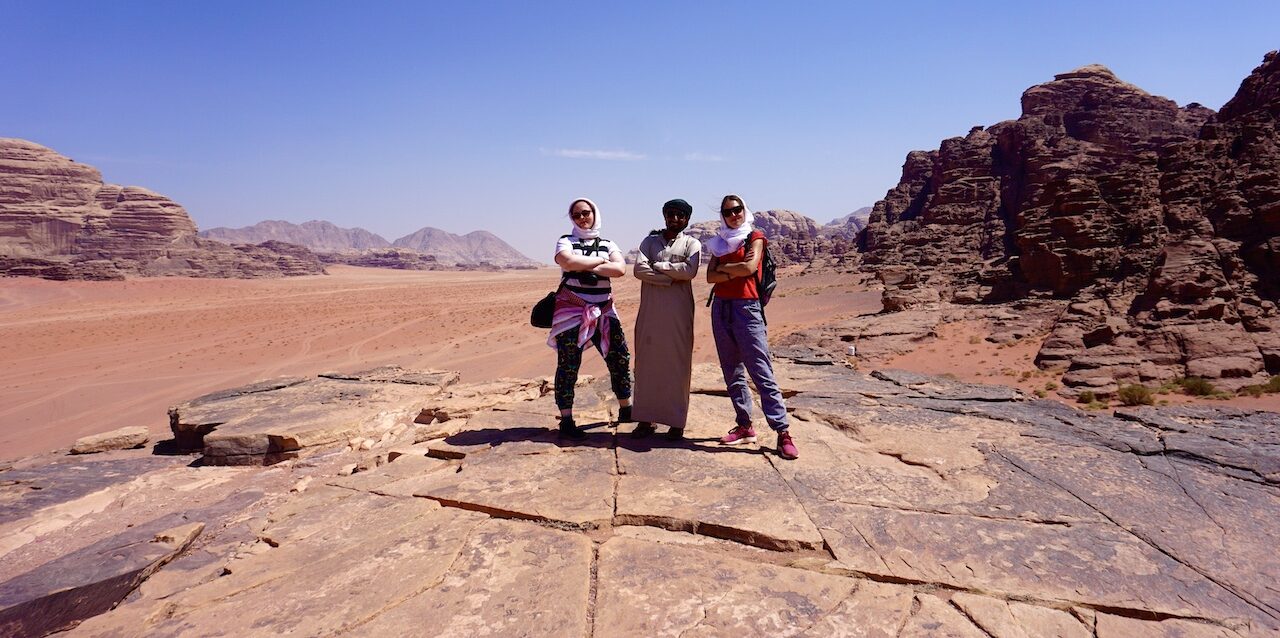
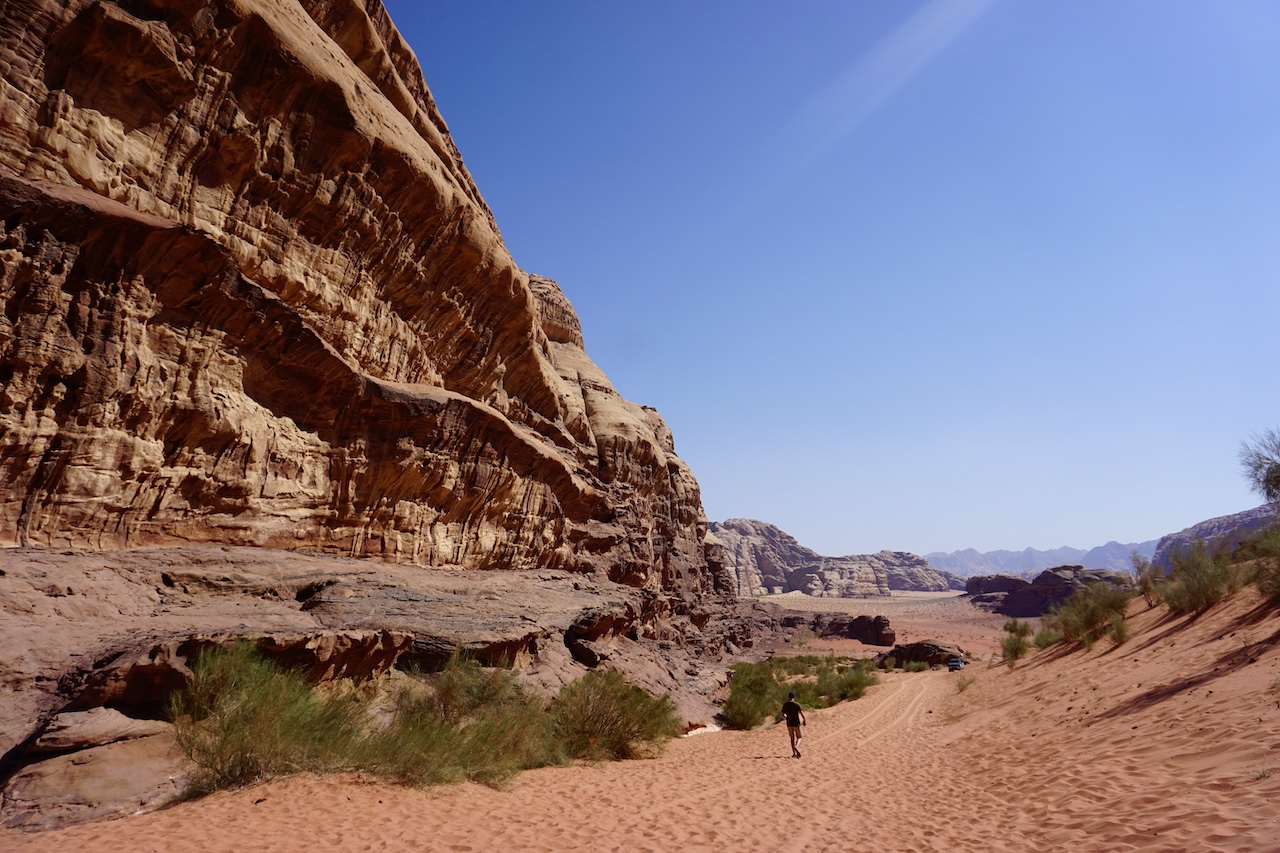
Jordanians were by far the friendliest people I have met on any trip. The second most striking thing after Jordanian hospitality was the landscape and, of course, the heat. I had experienced other kinds of heat before in Asia, Europe, the Caribbean: tropical, humid, heavy air that sticks to your skin. Jordanian heat felt different. It was overwhelmingly dry and relentless, and once outside, there was nowhere to hide from it. Even now, I still cannot decide which type of heat is harder to tolerate.
Driving through Jordan was pleasant, although a few things caught me off guard. I had never driven before in the Middle East. Everybody seemed to drive according to their own rules while somehow remaining extremely sensible and cautious at the same time. I know that sounds contradictory, but that was exactly how it felt from behind the wheel.
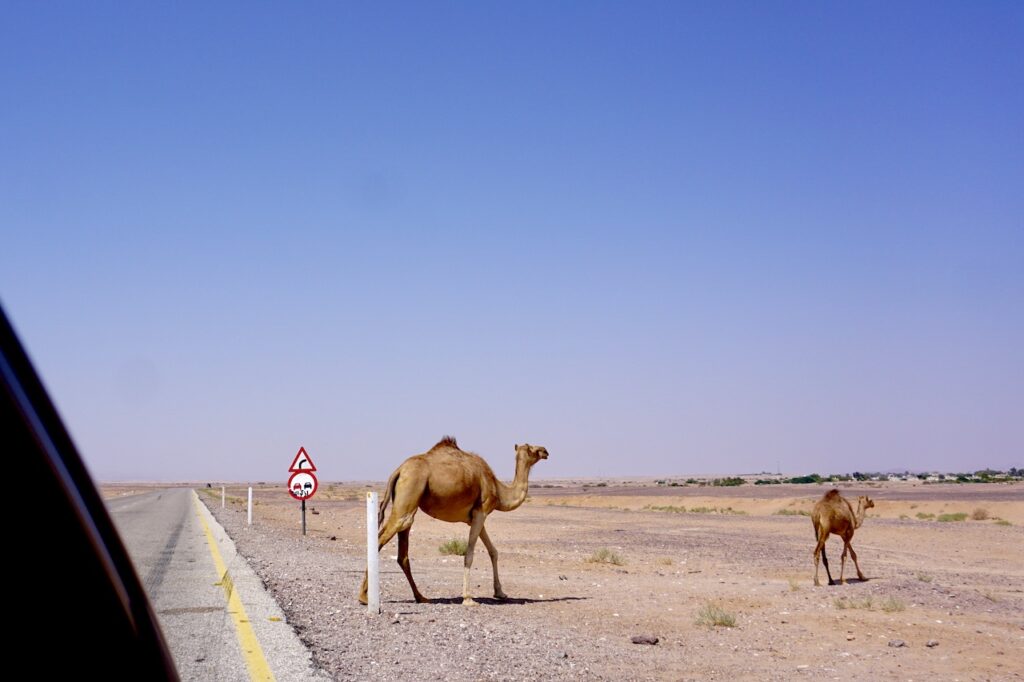
There were speed bumps on highways, enormous petrol tankers sharing narrow roads, constant honking, and occasionally camels wandering nearby as though traffic rules did not concern them.
Once we left the cities, petrol stations became surprisingly scarce, so we quickly learned never to drive with a half-empty tank. In one hilarious incident, while searching for fuel near the Saudi border, I somehow located an oil refinery before finding an actual petrol station.
This was a budget trip. We approached it with a different mindset: to explore more and travel as cheaply as possible. We stayed in inexpensive hostels and sleeping under the stars in the desert remains one of my favourite memories from the trip.
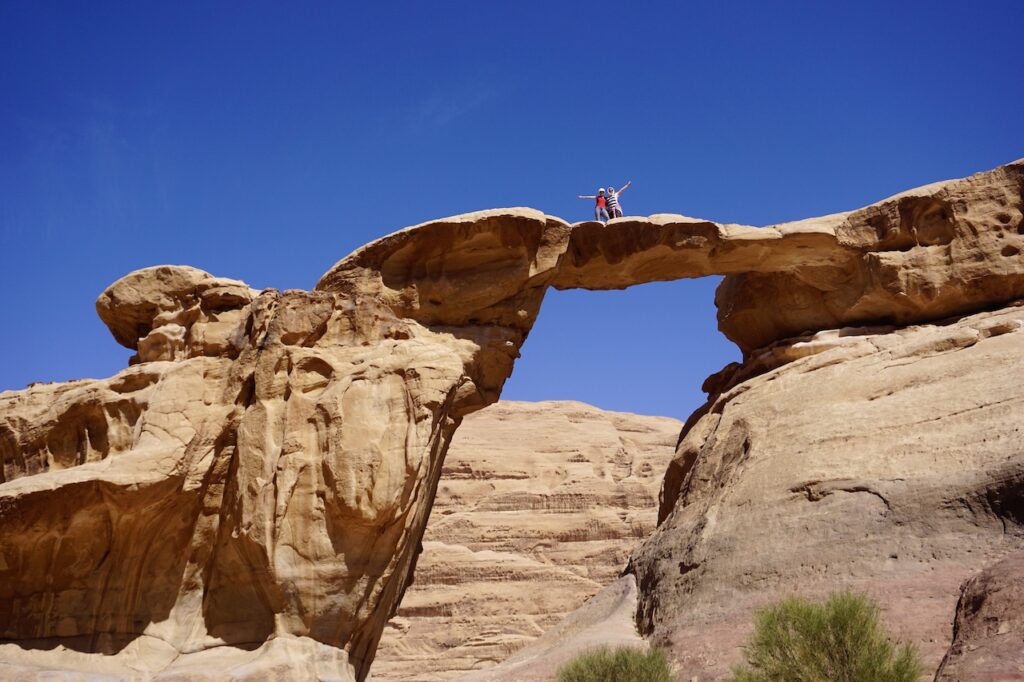
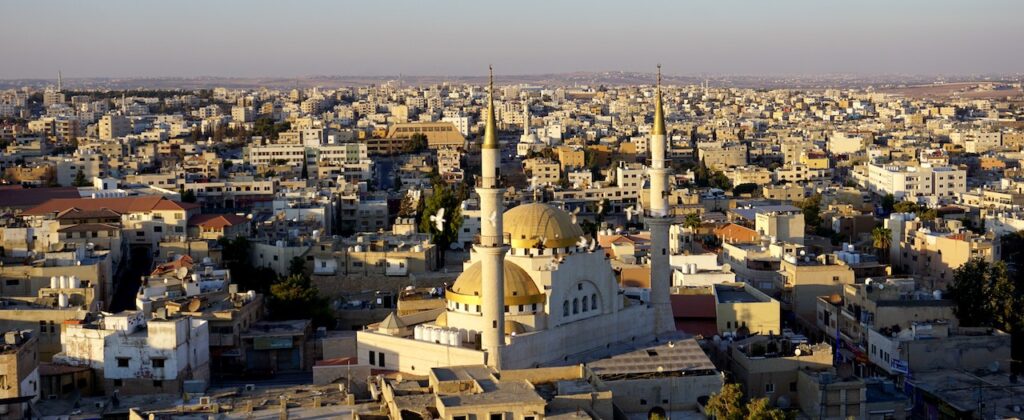
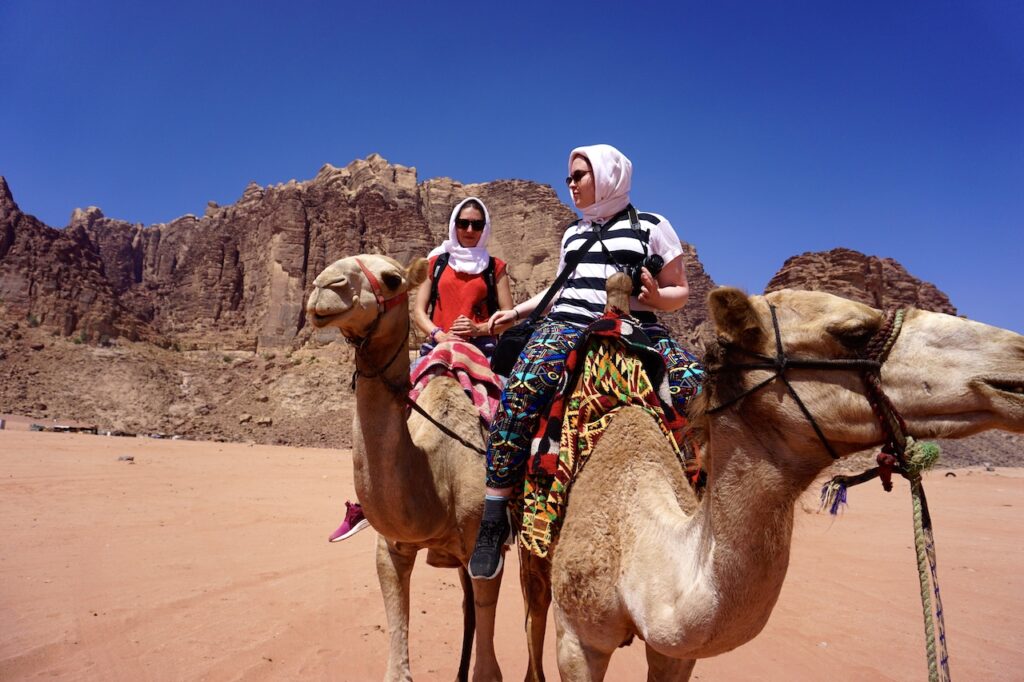
In just one week, we wanted to experience as much of Jordan as we could: Madaba, the Dead Sea, Petra, Wadi Rum, the Red Sea, and finally Amman for food, historical sightseeing, and a little rest before departure.
Evenings with the Oud
At one of the hostels we stayed in, our evenings slowly turned into a small ritual.
An older man would sit outside playing the oud, a traditional Middle Eastern string instrument somewhat resembling a guitar. He had a gentle presence about him. Besides entertaining guests with music, he also shared stories, local history and occasional warnings about scams targeting tourists in Jordan. Whenever he played, he invited people to gather around and offered tea.
We were offered tea many times throughout our trip and although it tasted different from how we usually drink it in Poland, the custom itself felt deeply familiar to me.
Tea in Jordan and Poland
Tea occupies an important place in both Polish and Jordanian cultures, although it is enjoyed differently.
In Poland, tea is closely associated with home. It is served indoors, often in large mugs and accompanies long conversations around the kitchen table with family and friends. Offering tea to a guest is one of the simplest ways of making someone feel comfortable.
In Jordan, tea also symbolises warmth and hospitality, but it often extends far beyond the walls of the home.
During our trip, we watched tea being prepared outdoors over open flames, with kettles balanced between stones in the desert or beside the roadside. The process itself became part of the experience: watching the water boil, smelling the strong aroma, and waiting together while the tea was poured into small glasses.
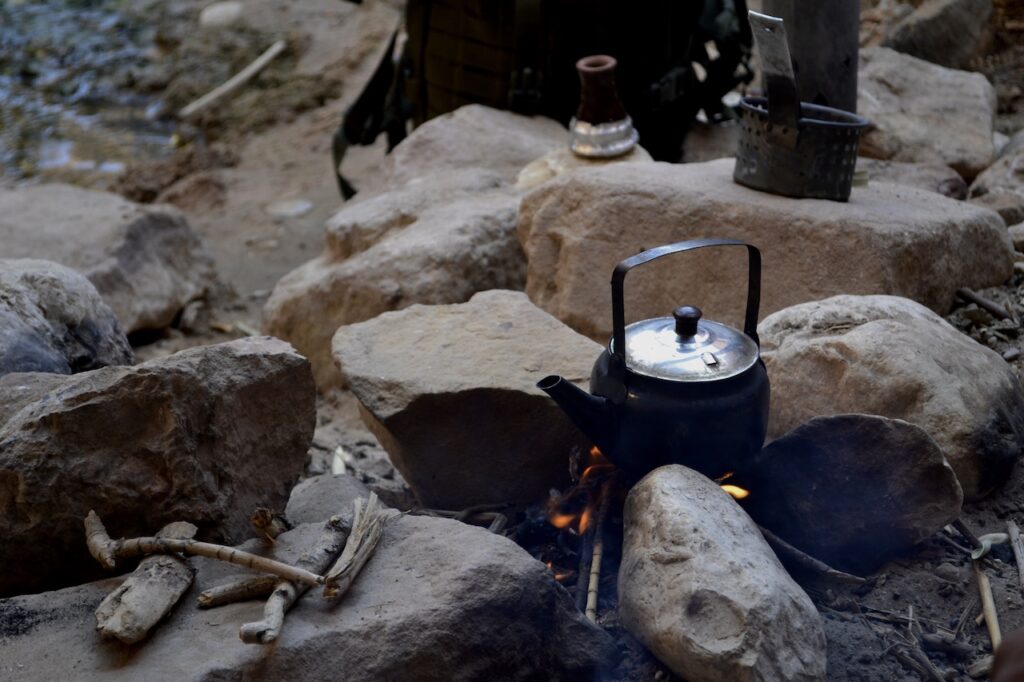
In both countries, tea brings people together. The difference is that in Poland, tea belongs mainly to the intimacy of the home, while in Jordan, hospitality seemed to travel wherever people happened to meet.
Warda
One evening, after a long day of sightseeing, the old man called us over once again to listen to his music. By then, joining him had already become part of our evenings. But this time, we decided to order tea for all of us, including him.
For a brief moment, I noticed a look of surprise on his face.
We spent hours listening to music, sharing stories, and talking late into the evening. At some point, he even gave me an Arabic name — Warda, meaning “flower.” Funny how I still remember that after all these years. That night was our last at the hostel.
As we were getting ready to leave, he said something that stayed with me long after I returned home:
“You see, we Jordanians really want everybody to feel welcome in our country. For years, I have always offered tea to tourists passing by, but I was never invited to have tea by a foreigner. Thank you.”
What “Welcome” Means
Throughout the trip, I kept trying to understand the meaning behind the word “welcome.” I heard it so often that it almost began to sound unreal. I wondered whether it was simply politeness, a social habit, or perhaps something deeper that I did not fully understand yet.
That evening, sitting over tea and listening to the sound of the oud, I finally received my answer.
“Welcome” in Jordan was never just a word. It was the offer of a small glass of tea, a shared story at the end of the day, a warning meant to protect you, a smile from a stranger and the willingness to treat someone unfamiliar as a guest.
What moved me most was not only the generosity itself, but the old man’s surprise when we invited him to join us for tea. In that simple moment, hospitality became mutual. For a brief time, we were no longer simply travellers passing through. We became participants in the same ritual of giving and receiving.
Perhaps that is what “welcome” truly means. It is not only about being warmly received in a foreign country. It is also about recognising kindness when it is offered and finding a way, however small, to return it.