10 Useful Igbo Words and Phrases I Learned First (and Still Use Every Day)
I learnt my first Igbo words from my husband and the Nigerian community while living in China. They became my first real introduction to the world of Igbo. No structured lessons or formal classes, just listening to everyday conversations, asking questions, and slowly picking up words and expressions through daily life.
If you want to read how my Igbo learning journey began, I shared the full story in my first post.
These were the first 10 Igbo words and phrases I learnt, and I still use most of them every day. They also helped me overcome some of the challenges I talked about in “Is Igbo hard to learn“?
1. Ndeewo (Hello)
This was one of the very first words I learned and it instantly made interactions feel warmer. It’s a great way to start a conversation in Igbo.
2. Daalụ (Thank You)
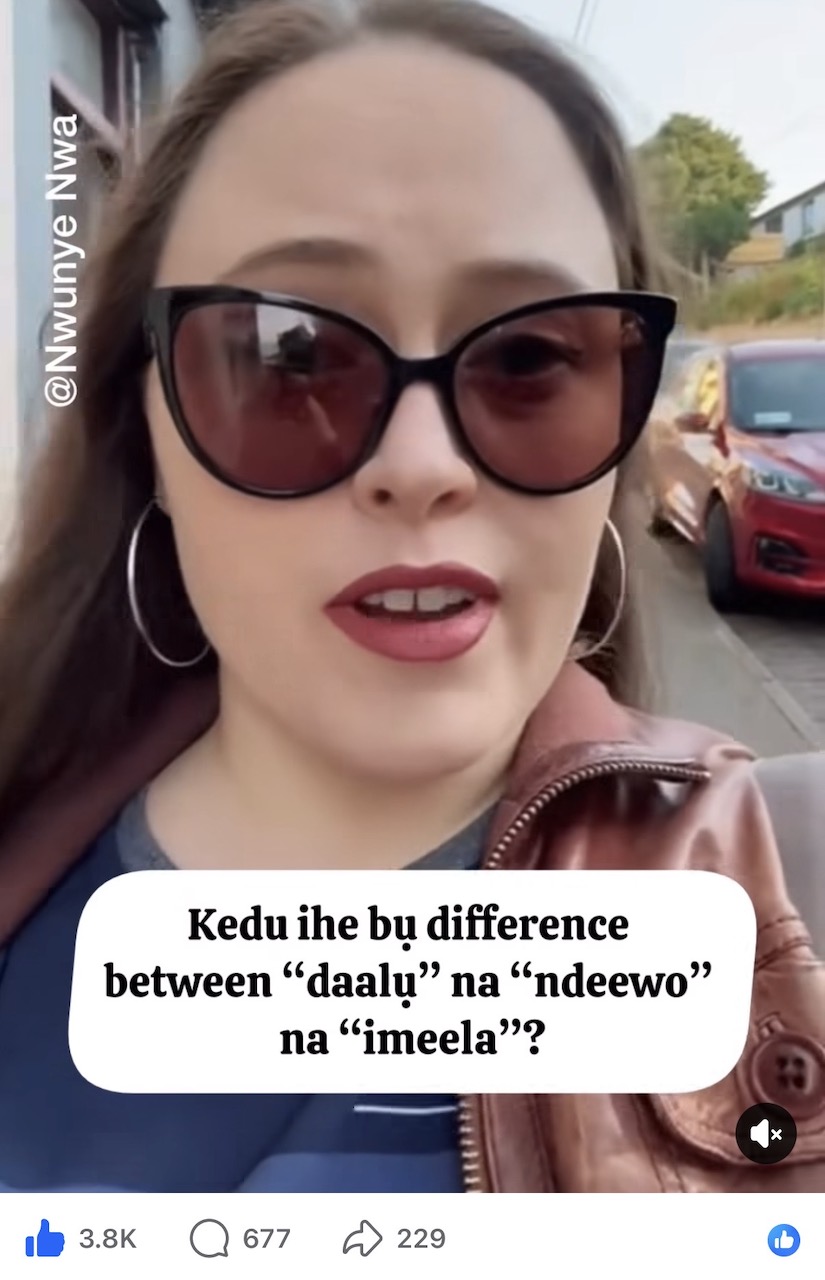
If there’s one word you’ll never overuse, it’s this one. Gratitude is deeply embedded in Igbo culture and “daalụ” doesn’t just carry politeness, it carries respect too. This reel about “daalụ”, “ndeewo” and “imeela” sparked amazing responses online.
3. Biko (Please)
I see it as a simple, and yet powerful Igbo word. Adding “biko” to any sentence immediately changes the tone. Personally, I feel like “biko” adds instant softness and kindness to sentences.
4. Kedụ/ Kedụ ka i mere? (How are you?)
This one opens the door to real interaction. It is a good icebreaker. When I say it to a native speaker I have just met, the reaction is always priceless. To them, its usage isn’t just about speaking, it was about engaging.
5. Ọ dị mma (It is good / I’m fine)
A perfect response to “kedụ ka i mere/kedụ?” and one of the most useful phrases. I found myself using it in so many situations beyond just answering questions. I sometimes use “adi m mma” to respond as well.
6. Ee (Yes)
Short, clear and used constantly. It’s one of those words you don’t think much about until you realise how often you say it.
7. Mba (No)
Just as important as “ee”. Learning both (ee and mba) early helped me navigate simple yes and no conversations, even when my vocabulary was still very limited.
8. Nnọọ (Welcome)
“Nnọọ” is used to acknowledge someone’s presence, arrival or entrance. It appeals to me as a warm Igbo expression used to welcome a person into a place, conversation, or gathering.
9. Chere (Wait)
Very practical and necessary. Whether in conversation or everyday situations, “chere” quickly became part of my active vocabulary.
10. Aha m bụ… (My name is…)
This phrase changed everything for me. Being able to introduce myself in Igbo made interactions feel real. It creates another golden moment whenever I introduce myself to a native speaker.
Why I Think These Igbo Words Are So Important for Beginners
These were not just beginner words. They became building blocks for my confidence and connection to the language. They helped me:
• Have small conversations even with the little Igbo I knew,
• Feel connected instead of feeling like an outsider learning vocabulary,
• Build confidence through small daily interactions.
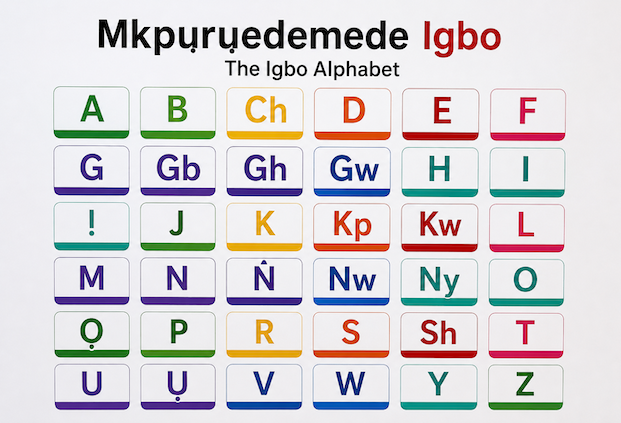
Now that you’ve learned some useful Igbo words and phrases, challenge yourself with my Igbo Tone Practice Tool. It’s a free interactive listening exercise that helps you hear the tonal differences that can change the meaning of a word.



I just understand that you were specifically created by God, to lead not only the real Igbos who have denied the use of their Igbo language; and the other tribes who are seriously needing to learn Igbo Language into the right path.
Amazing 😻
Thanks, I’m glad you found it amazing!
Odikwa Nma
Chukwu gozie gi na di gi
Brilliant. Keep it up. We are proud of you nwayi oma
It’s beautiful to see how much you have embraced not just the family you married into, but also the culture, language, and way of life of their people. You inspire many Igbos around the globe. Daalu nne!