Does Colour Have Meaning in Igbo Culture? Understanding Igbo Colour Symbolism
When we think about colours, we often think about appearance first. A red dress, a white outfit or a black car may simply be a matter of personal preference. But in many cultures, colours can communicate more than what something looks like. They can carry associations with life, purity, spirituality, celebration, grief, status, nature and even identity.
In my journey of learning the Igbo language, I have come to understand that Igbo is highly descriptive and most times context plays a huge role.
In a discussion with a native speaker (who preferred to remain anonymous) on how profound I find the word for “green” (ndụ ndụ) to mean “life” (ndụ), a deeper conversation started…
So, does colour have meaning in Igbo culture?
Yes, colours can carry cultural and symbolic meanings in Igbo culture. However, there is an important distinction: there is no simple, universal colour code that can be applied across all Igbo people and communities. The significance associated with a particular colour can vary depending on the context, occasion, community and the object or clothing being discussed. Understanding this is important when exploring colour meaning in Igbo culture and Igbo colour symbolism.
What do colours represent in Igbo culture?
Colour symbolism and representation can be found across different aspects of Igbo cultural life. The context in which a colour appears can therefore shape how it is understood. For example, colour may take on different meanings when it appears in ceremonial dress, religious or spiritual settings, funeral or mourning practices, traditional art or body decoration such as uli.
This means that asking, What does this colour mean in Igbo culture? does not always have one simple answer. Instead, it can be more useful to ask: What does this colour represent in this particular Igbo cultural context?
That distinction matters because colour does not necessarily carry meaning by itself. Its significance can instead emerge from its relationship with an object, ceremony, person or cultural practice.
Can you give an example of how colour symbolism can change depending on context? For example, what meanings can colour “white” carry in Igbo culture?
The Igbo word for white is ọcha. White provides a particularly interesting example of how colour can become culturally meaningful.
One important example is nzu, the traditional white chalk used in various Igbo social, cultural and spiritual contexts. The significance of nzu goes beyond the fact that it is white. The Smithsonian’s National Museum of African Art notes that Igbo communities associate nzu with “purity, beauty, and sanctity”.
Nzu appears in ceremonies and traditional practices, including being offered alongside kola nuts and being applied to the body. Its meaning is therefore connected not only to its colour, but to what it is, how it is used and the setting in which it appears.
This gives us a more useful way of thinking about colour symbolism in Igbo. I think it is not simply white equals purity but it is closer to say that white in the context of nzu, cultural practice and context equals a particular symbolic meaning. This also explains why simply creating a list of Igbo colour meanings and symbolism can sometimes oversimplify the culture.
Does colour play a role in traditional Igbo clothing?
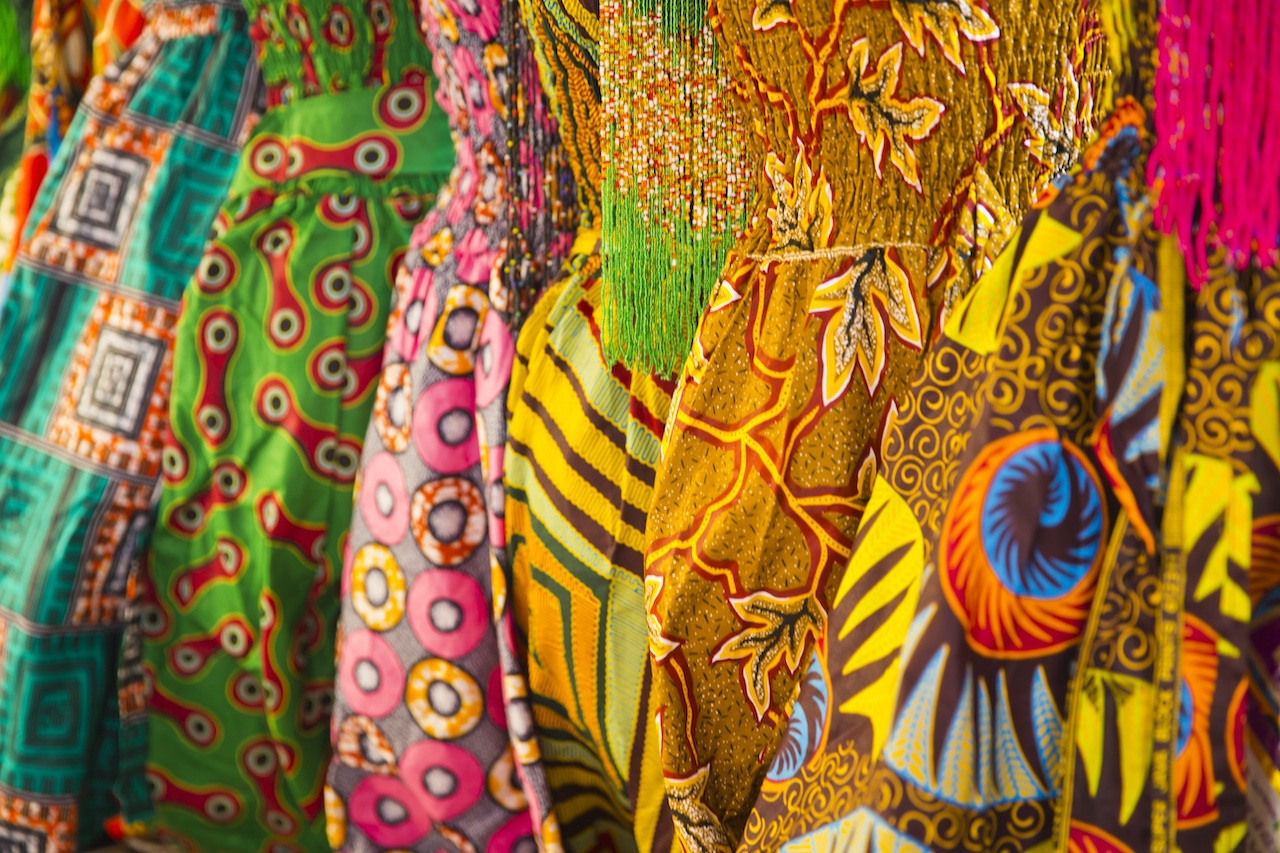
Clothing can communicate identity, occasion, social position and cultural belonging. Colours, patterns, fabrics and accessories can all contribute to the message being communicated.
Recent research on Igbo textiles, for example, examines fabrics such as Akwete, Isiagu and Ukara-Igbo as forms of non-verbal communication that can carry layers of social and cultural meaning.
This is important because it shows that visual symbolism in Igbo culture is not necessarily about colour alone. A fabric’s pattern may communicate something. The occasion may communicate something and of course the way the garment is worn may communicate something, too.
So when looking at the colour of a traditional Igbo outfit, it is worth considering the fabric, pattern, accessories, occasion and wearer, rather than trying to interpret the colour in isolation.
How do traditional Igbo meanings and symbolism of colour relate to the ways colour is used in contemporary Igbo society?
Igbo people today use colour in many different settings, from traditional ceremonies to everyday fashion, social media, business, weddings and contemporary cultural events. Not every colour choice in these settings necessarily carries a traditional cultural meaning.
Someone may choose a pink outfit simply because they like pink. Someone else may choose black because it suits their style. A particular colour may also be chosen because it is fashionable, works well with another colour, or fits a modern event or design. At the same time, this does not mean that traditional colour symbolism has disappeared.
Traditional objects, clothing, ceremonies and cultural practices can still carry meanings that extend beyond appearance. In these situations, colour may continue to participate in a wider system of cultural communication. This creates an important distinction between traditional symbolism and personal expression.
A colour appearing in an Igbo cultural setting does not automatically mean that the wearer or creator intended a traditional symbolic message. Equally, the fact that a colour is being used in a modern setting does not mean that cultural meaning is necessarily absent.
The context is what I think would help understand the difference. This is also why colour symbolism should not be treated as a rigid dictionary where every colour has one permanent definition. Cultural meanings can continue to exist while the ways people use colour change over time.
Na Mmechi – in conclusion,
Colours in Igbo culture can become part of a much larger cultural language involving clothing, ceremonies, spirituality, nature, identity and personal expression. But perhaps the most important lesson, I think, is that colour does not always have a fixed meaning on its own. The example of nzu shows how colour, object and cultural practice can work together to create meaning.
The same principle can be seen more broadly in Igbo visual culture. A colour may be significant, but so may the fabric, pattern, object, ceremony, wearer or cultural practice with which that colour is associated.
So the next time you see a particular colour in an Igbo traditional outfit, ceremony or cultural setting, don’t immediately assume you know what it means. Ask: Why was that colour chosen here? Does it carry any cultural significance, or is it simply a matter of personal taste? That question can lead to a much deeper understanding and several fascinating intricacies of the culture.
Thank you so much for sharing your knowledge with me. I have learnt a lot and I hope others will find this interesting as well.
You are most welcome. It was a pleasure.